
Poisoning the well is usually a preemptive, sweeping attempt to disqualify a person, group, or source so that what they say is dismissed without a fair examination of their reasons or evidence.[3][4]
The tactic can be crude or polite. It can use an insult, an allegation of bias, an identity label, a past mistake, or a true but overextended credibility concern. What makes it defective is the move from background information to blanket dismissal.
Start with the meaning and recognition test, compare worked examples and fair rewrites, or inspect the documented origin in Newman’s 1864 passage.
On this page
How the Fallacy Works#
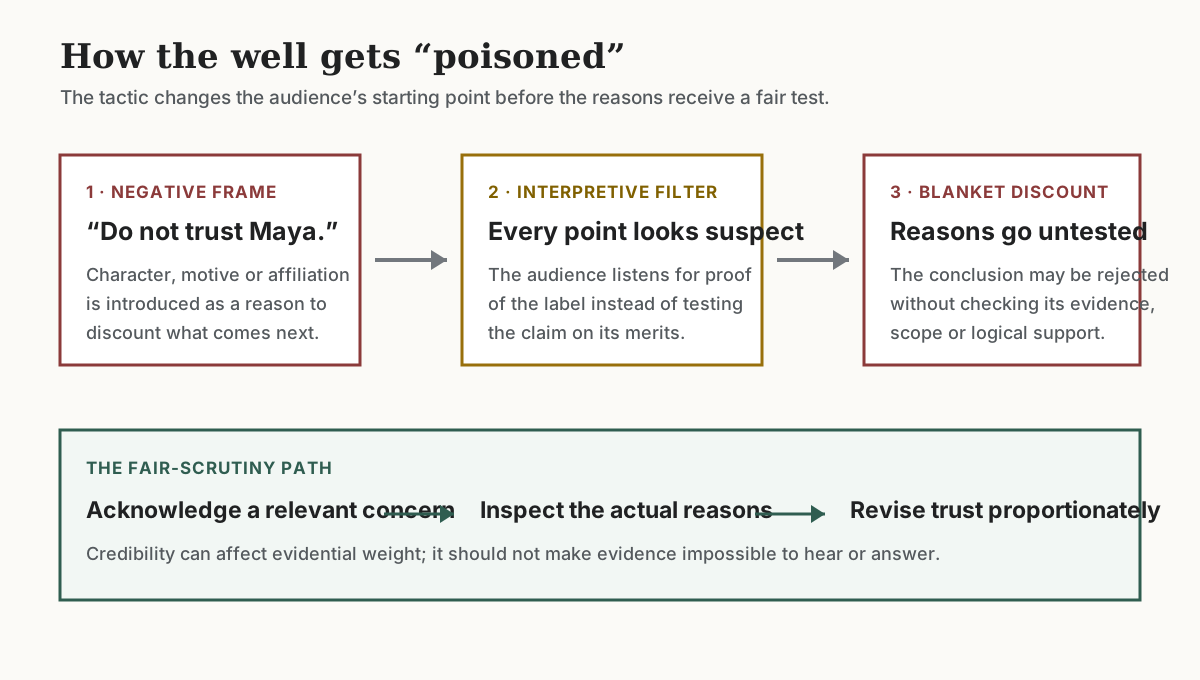
The fallacy is best understood as a sequence. First comes a negative frame about the participant or source. Next, the audience is encouraged to use that frame as a filter. Finally, the contribution is discounted before its premises, evidence, or relevance have been tested.
Walton's specialist analysis emphasises the conversational harm: the tactic can deny an opponent the practical ability to advance the arguments needed for a critical discussion.[4]
Figure 1
An Annotated Example#
The comment does not prove that Noor is wrong. Nor does identifying the fallacy prove that she is right. It restores the need to examine the audit.
Before Noor presents the audit, remember that she built her career by finding faults in other people's work.
- Preemption: the remark comes before Noor presents the audit.
- Target: it frames Noor's professional role and motive, not any audit finding.
- Scope: it suggests that whatever she reports should be heard as careerism.
- Missing step: nobody has yet checked the audit method, documents, calculations, or response from the audited team.
A Closely Matched Non-Example#
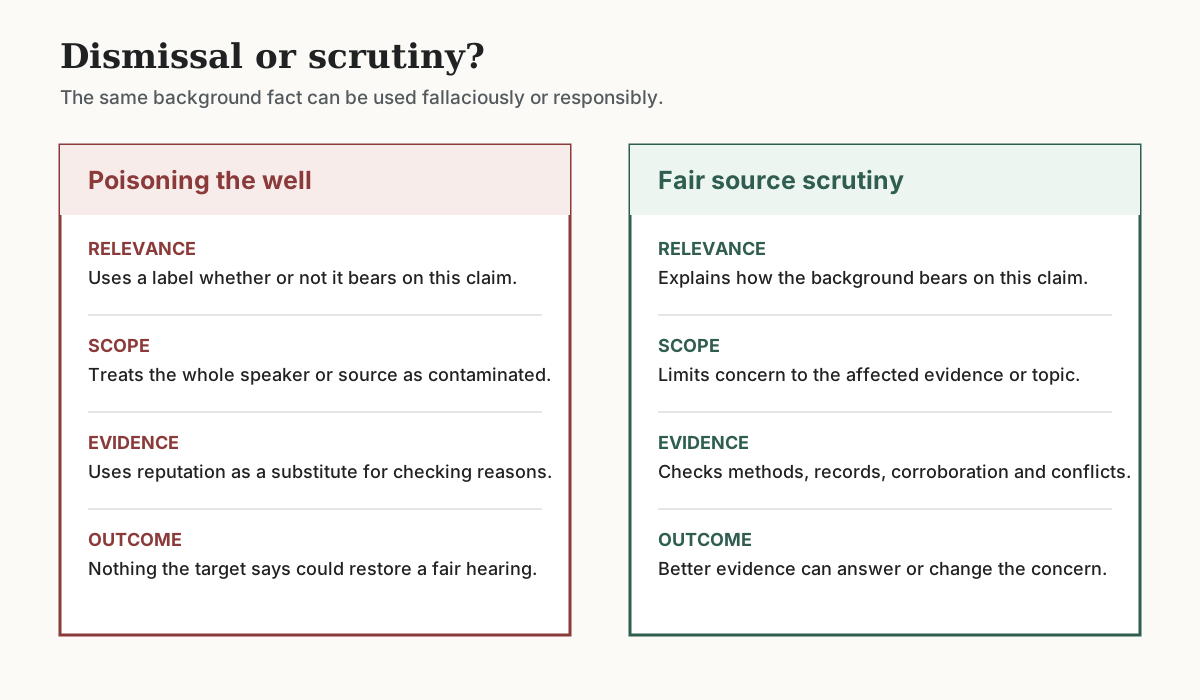
This statement raises a relevant incentive but does not demand automatic rejection. It names the possible mechanism of distortion and proposes a check. That is source criticism rather than poisoning the well.
Informal-logic accounts allow that some attacks on credibility can be reasonable when they genuinely bear on a source's reliability; the difficult task is establishing relevance and appropriate weight.[6][5]
Noor's firm is paid more if the audit expands. Disclose that arrangement, then have an independent reviewer reproduce the three disputed calculations.
Common Forms#
| Form | Typical wording | What it asks the audience to skip |
|---|---|---|
| Character | She is dishonest, so ignore what follows. | Checking the actual claim |
| Motive | He only says this for attention. | Testing whether the reasons hold |
| Affiliation | That outlet is partisan; nothing it publishes matters. | Reading this report and corroborating it |
| Identity | People from that group cannot understand this issue. | Assessing the participant's knowledge and argument |
| Past error | They were wrong once, so the next warning is worthless. | Asking whether the present method has improved |
| Immunising label | Anyone who objects is a conspiracy theorist. | Distinguishing serious objections from unserious ones |
Why It Can Be Persuasive#
Audiences cannot investigate every statement from first principles, so they reasonably use credibility as one guide. Poisoning the well exploits that necessity by turning a limited credibility question into an unlimited veto.
The tactic also changes social costs. Once a position has been associated with ignorance, disloyalty, prejudice, or corruption, people may avoid asking questions because they do not want the label applied to them.
Kotzee's discussion is especially useful here: a participant's social background can sometimes affect knowledge, but a broad fact about race, sex, or other identity is not by itself a legitimate reason to exclude that participant from debate.[5]
Origin of the Expression#
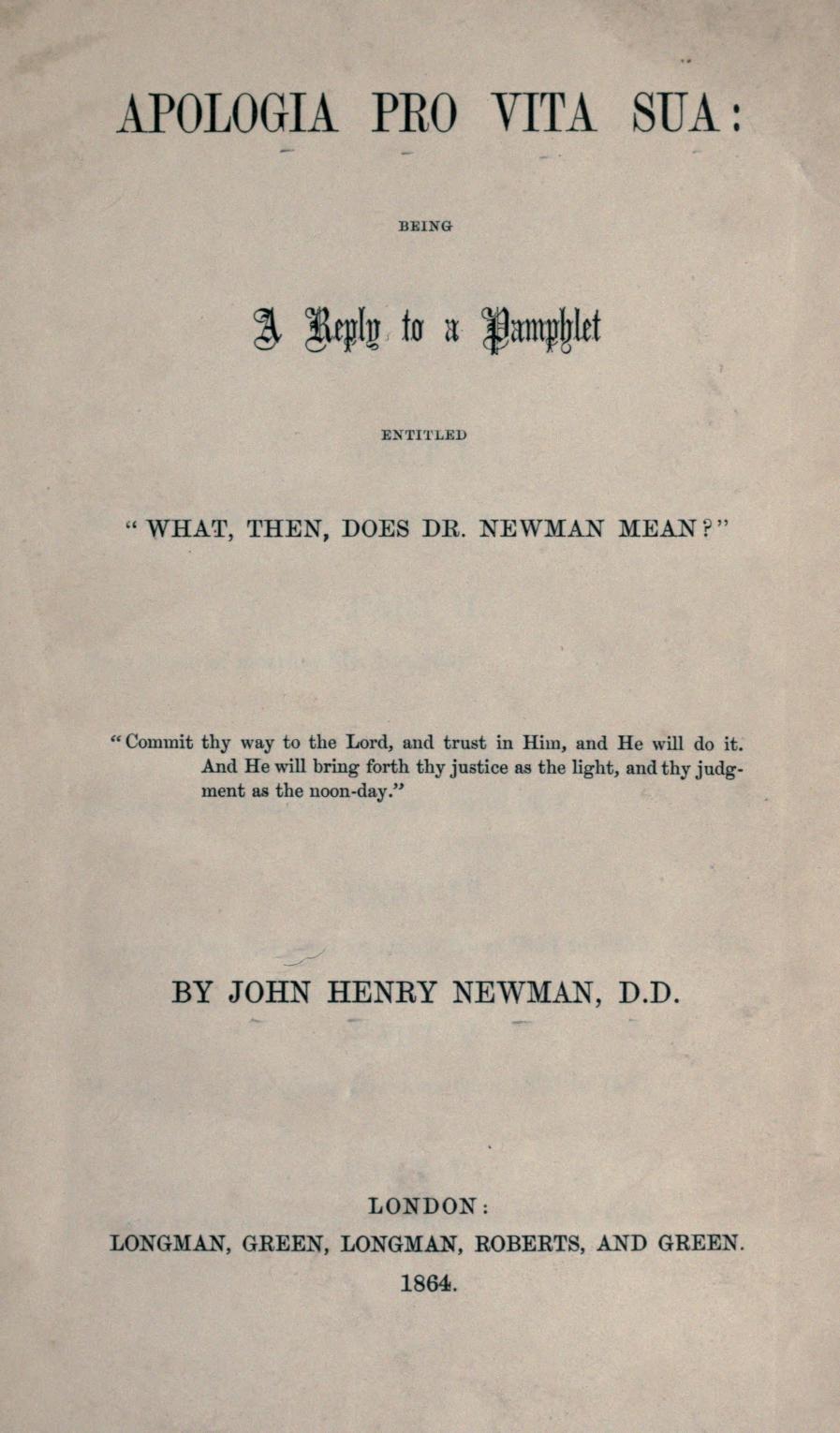
The modern argumentative expression is commonly traced to John Henry Newman's 1864 Apologia Pro Vita Sua. During his dispute with Charles Kingsley, Newman objected that suspicion had been created around anything Newman might say in reply.[1][2]
It is safer to say commonly traced to Newman than to claim conclusively that he invented every metaphorical use. The medieval history of false well-poisoning accusations is important context, but it should not be presented as a proven source for Newman's wording.
The documented history
Read the Newman passage, publication context, and the separate history of persecution narratives.
Read the origin and history
Primary source
Is It Always an Ad Hominem?#
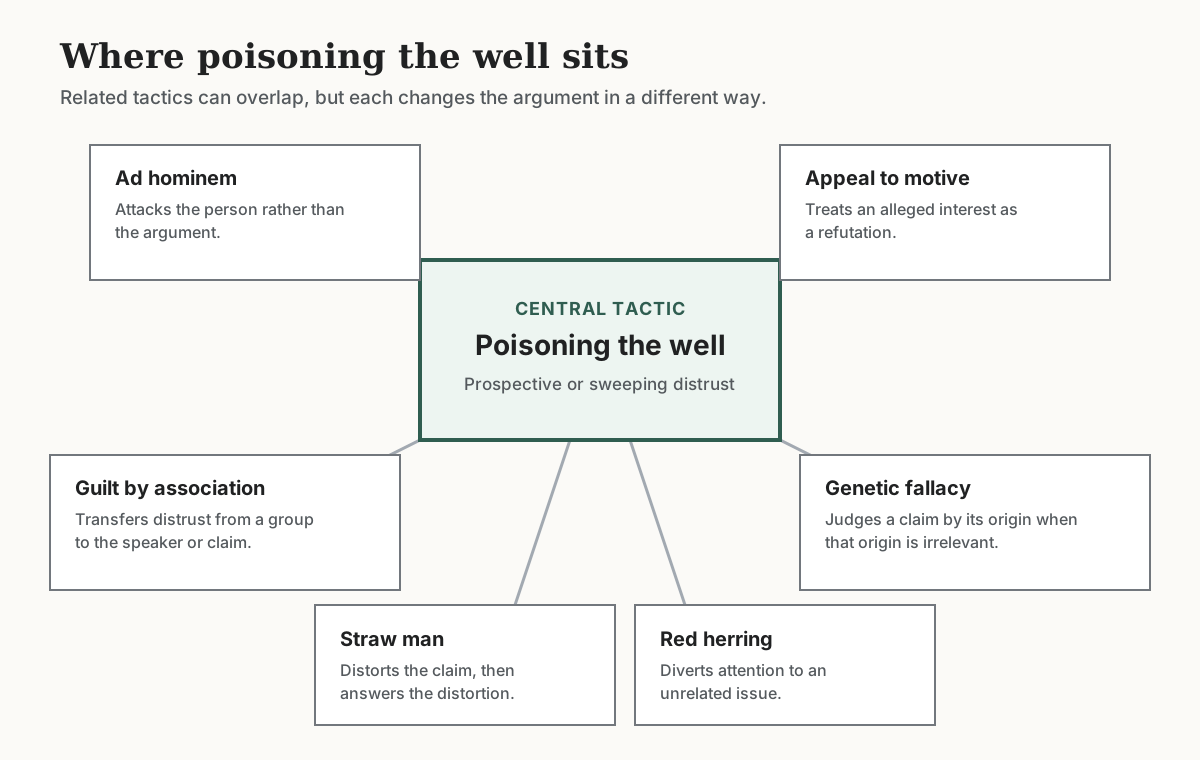
Introductory references commonly classify poisoning the well as a preemptive circumstantial ad hominem: an attack on a speaker's circumstances is used to damage their argument in advance.[3][7]
Walton offers a wider dialogical account. On that view, the central defect is a strategic attempt to shut down an opponent's ability to make a relevant contribution. This can involve a person, a group, a source, or a claimed position to know.[4]
Poisoning the well and ad hominem
Compare the categories, timing, edge cases, and different repair strategies.
Compare poisoning the well with ad hominemPoisoning the well and the genetic fallacy
See how pre-discrediting a source differs from evaluating a claim solely by its origin.
Compare poisoning the well with genetic fallacy
Related Fallacies#
Real examples often combine several defects. A speaker can pre-discredit an opponent, distort the opponent's proposal, and divert the audience to a side issue in a single sentence. The useful question is not which label wins, but what must be repaired.
Fallacy comparison index
Compare the target, timing, mechanism, and correction for eight neighbouring patterns.
Open the fallacy comparison indexCritical-thinking glossary
Look up source, argument, relevance, burden of proof, steelmanning, and related terms.
Browse the glossary
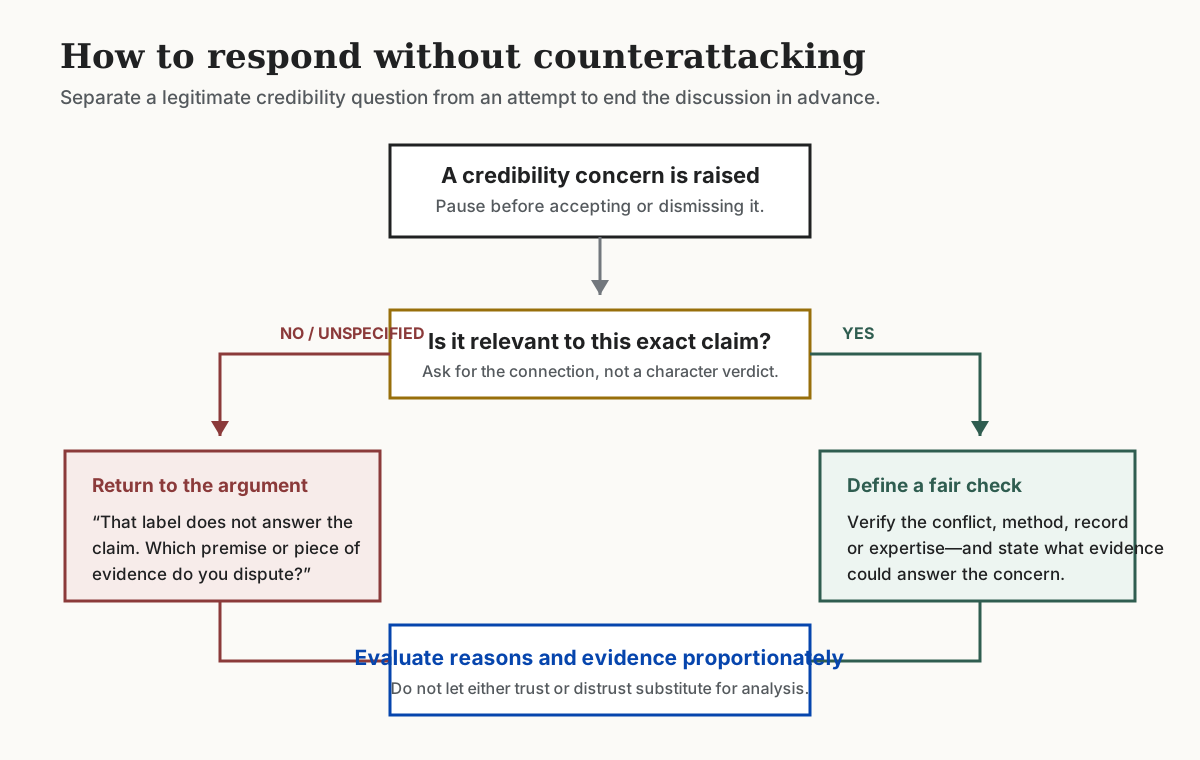
How to Respond#
That background may justify closer checking. Which part of the claim does it undermine, and what evidence would settle that?
- Restate the claim that has not yet been answered.
- Acknowledge any background fact that is accurate and relevant.
- Ask how that fact affects a premise, method, document, or piece of testimony.
- Propose an independent check rather than demanding either blind trust or blanket distrust.
- Keep the burden of proof on the substantive issue.
Response scripts by setting
Use tailored scripts for meetings, classrooms, public debate, research disputes, family conversations, and online threads.
Open the response guide
Frequently asked questions#
What does poisoning the well mean?
Poisoning the well means preemptively framing a person, group, or source as unworthy of a fair hearing, so that an audience discounts what they later say without first examining the reasons or evidence.
Is poisoning the well a formal fallacy?
No. It is normally treated as an informal fallacy because whether the move is defective depends on relevance, context, and how the credibility information is used—not only on logical form.
Must the attack come before the argument?
Preemption is the classic pattern: the audience is primed before the target can speak. Some scholarship uses the label more broadly for a move that attempts to disqualify a participant's present or future contributions and shut down discussion.
Is poisoning the well a type of ad hominem?
It is often classified as a preemptive circumstantial ad hominem, because attention moves from an argument to a supposedly disqualifying fact about its source. Douglas Walton also analyzes it as a discussion-silencing tactic that can block a participant's ability to argue.[3][4]
Is mentioning bias always poisoning the well?
No. Bias can affect what a source notices, measures, or reports. A fair criticism identifies the relevant mechanism and calls for an appropriate check; a poisoned-well move treats a broad allegation of bias as permission to ignore the claim.[6]
Can true information be used to poison the well?
Yes. A true detail can be irrelevant, exaggerated, or made to bear more weight than it can support. Truth is necessary for responsible source criticism, but truth alone does not establish relevance or justify blanket dismissal.[5]
How can I recognize poisoning the well?
Look for timing, scope, and substitution: negative framing arrives before the contribution; it disqualifies broadly; and it takes the place of answering the reasons or evidence.
How should I respond?
Acknowledge any relevant background, ask exactly how it bears on the present claim, and return to a shared test: "That concern may justify checking the source. Which premise, document, or measurement does it undermine?"
Companion video channel
Further watching on Slopernet
Poisonwell.com is paired with Slopernet for longer-form video discussions. The channel link is offered as further exploration, not as evidence for the claims cited above.
References#
John Henry Newman. Apologia Pro Vita Sua. Longman, Green, Longman, Roberts, and Green. 1864. Part I; original-edition p. 22.
Primary text of Newman's response to Charles Kingsley; cited for the passage describing an attempt to create suspicion of Newman's reply in advance.
John Henry Newman. Apologia Pro Vita Sua. Newman Reader, National Institute for Newman Studies. 1864. Part I, original-edition p. 22.
Searchable transcription of the short passage in which Newman writes of poisoning the public mind by anticipation and calls the tactic 'poisoning the wells.'
Bradley Dowden. Internet Encyclopedia of Philosophy. Internet Encyclopedia of Philosophy. Entries on Ad Hominem, Poisoning the Well, Straw Man, Red Herring, and related fallacies.
Peer-reviewed reference used for concise fallacy definitions and for the common classification of poisoning the well as preemptive circumstantial ad hominem.
Douglas N. Walton. Argumentation. Argumentation, volume 20, issue 3, pages 273–307. 2006. pp. 273–307.
Peer-reviewed analysis of poisoning the well as a strategic personal attack that can prevent an opponent from contributing arguments to a critical discussion.
Hendrik Kotzee. Argumentation. Argumentation, volume 24, issue 3, pages 265–281. 2010. pp. 265–281.
Peer-reviewed discussion of when a participant's background can be relevant and why broad identity facts alone do not legitimately disqualify participation.
Leo Groarke. The Stanford Encyclopedia of Philosophy. Metaphysics Research Lab, Stanford University. 2026. Sections on informal argument evaluation and ad hominem.
Scholarly overview used for the broader context of evaluating ordinary-language arguments and for the point that source criticism can sometimes be relevant rather than automatically fallacious.
Encyclopaedia Britannica. Encyclopaedia Britannica.
General reference on ad hominem reasoning and common varieties.
Tzafrir Barzilay. Poisoned Wells. The Middle Ages Series. 2022. Introduction and chapters 2–5.
Historical study of how allegations of well poisoning targeted lepers, Jewish communities, and other minorities and became instruments of persecution.
United States Holocaust Memorial Museum. Holocaust Encyclopedia. Holocaust Encyclopedia. Medieval Europe and Black Death section.
Institutional history reference documenting the false antisemitic accusations, including well-poisoning allegations during the Black Death.
Revision history
- : Added direct reading paths from the overview into the meaning, examples, and documented origin guides. — reviewed by Poisonwell Editorial Team
- : Rewritten as a source-led reference with a narrower definition, documented boundaries, new diagrams, and claim-level citations. — reviewed by Poisonwell Editorial Team